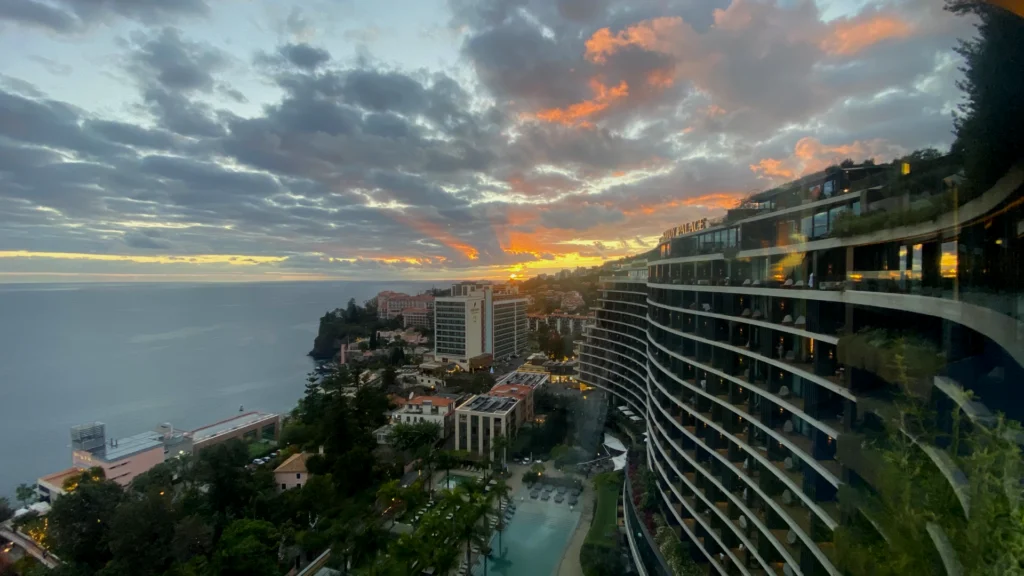
Working Remotely in Madeira: The Complete 2027 Guide
Madeira has become much more than a beautiful place to escape to for a week.
Over the past few years, it has developed into a genuine destination for people who want to live and work somewhere different for a few weeks, a few months, or longer.
The attraction is easy to understand. You can start the morning at your laptop, finish a video call before lunch, and be walking along a levada, swimming in the Atlantic or exploring the mountains later that same day.
But working remotely from Madeira is not simply a matter of finding a sunny apartment with a good view.
If you are planning to stay for several weeks or months, the practical details matter. Internet reliability, workspace, location, transport, climate, healthcare, community, accommodation and immigration rules can make the difference between a stay that looks good on Instagram and one that genuinely works.
This guide covers what you actually need to know before choosing Madeira as your remote-work base in 2027.
Why Madeira works so well for remote workers
Madeira offers an unusual combination of things that are difficult to find together.
There is a mild climate, excellent natural surroundings, good infrastructure, a growing international community and a relatively compact island where very different environments are within easy reach of one another.
It is also part of Portugal and the European Union, which gives EU citizens the familiarity of living within the European framework while offering international visitors a well-established destination with modern infrastructure.
The island has also actively embraced remote work.
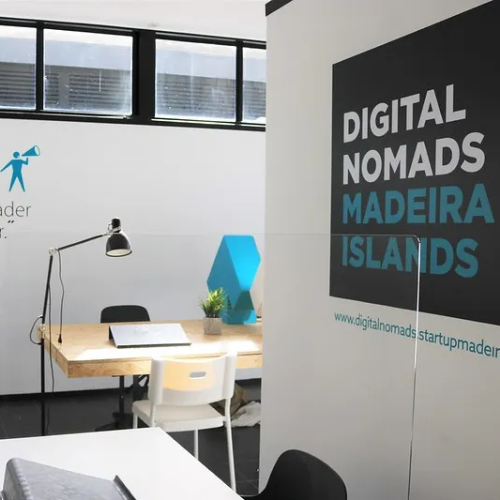
The Digital Nomads Madeira Islands project, developed through Startup Madeira, began in 2021 with Ponta do Sol as its Nomad Village.
Since then, the wider network has expanded to other locations, including Funchal, Machico and Sa.
That matters because Madeira is no longer simply a destination where remote workers happen to find themselves. There is now an established community and infrastructure around the lifestyle.
But there is another important point.
You do not have to live in the most obvious digital-nomad hotspot to benefit from working remotely in Madeira.
Where should you stay in Madeira?
One of the biggest decisions is choosing the right location. Madeira is small enough to explore extensively, but the experience of living in Funchal is very different from staying in the countryside in the mountains or in one of the quieter eastern communities.
Funchal
Funchal is the obvious choice if you want the greatest concentration of restaurants, cafés, shops, services, nightlife and coworking options.
It is the island’s main urban centre and probably the easiest choice for someone who does not want a car.
The trade-off is that it feels like a city.
If your ideal remote-working experience involves stepping outside your door into a busy neighbourhood, meeting people spontaneously and having everything within walking distance, Funchal makes sense.
If you are looking for peace, space and a stronger connection with the countryside, there are better options.
Ponta do Sol
Ponta do Sol has become internationally associated with Madeira’s remote-work scene.
It was chosen as the original Digital Nomad Village, with a free working space, community events and a network designed specifically to bring remote workers together.
It is particularly attractive if community is high on your list.
You can work during the day, meet other remote workers, attend community events and still be close to the sea.
The downside is that its popularity has also made it one of the more obvious choices. If you are looking for somewhere quieter and less associated with the digital-nomad scene, look beyond Ponta do Sol.
Machico
Machico is one of the most practical choices on the eastern side of the island.
It has everyday services, restaurants, supermarkets, a beach, a promenade and easy access to the airport and other parts of Madeira.
The official Digital Nomads Madeira Islands network also has an active community presence in Machico.
For someone who wants a genuine Madeiran town rather than a resort environment, Machico can be a very good compromise.
Santa Cruz
Santa Cruz offers another interesting balance.
It is close to the airport, has a seafront setting and gives you relatively easy access to both the eastern part of the island and Funchal.
It can suit remote workers who want a quieter base while remaining well connected.
Santo António da Serra
Then there are places that do not immediately appear on every digital-nomad list.
Santo António da Serra is one of them.
Situated on a high plateau at around 700 metres, the area is greener, cooler and very different from the coastal towns. It overlooks the areas around Machico and Santa Cruz and is characterised by gardens, private estates and a strong countryside setting.
It is not isolated.
The roads connect the area with Machico, Santa Cruz and the airport, while Funchal is also within practical driving distance.
For someone staying for one or several months, that can be a significant advantage.
You get the feeling of living in the countryside without being cut off from the rest of the island.
And for remote workers, that distinction matters.
Internet: the non-negotiable
Beautiful surroundings are irrelevant if your internet connection cannot handle a Monday morning video conference.
Before booking any accommodation, ask specific questions.
Do not simply accept:
“Yes, there is Wi-Fi.”
Ask:
- What is the actual internet speed?
- Is it fibre?
- Is the connection shared?
- Where is the router?
- Is there a proper workspace?
- Is there a backup connection?
- What happens if the main internet connection fails?
Fibre internet is available in many parts of Madeira, but availability is address-specific. MEO, for example, currently offers fibre services up to 1 Gbps, 2 Gbps and higher where technically available.
For a remote worker, however, the headline speed is not everything.
Reliability matters more than having an impressive number.
A stable 500 Mbps connection is more useful than a supposedly faster connection that regularly drops out.
If you work with large files, hold frequent video meetings, use cloud-based software or share the connection with other people, fibre becomes particularly important.
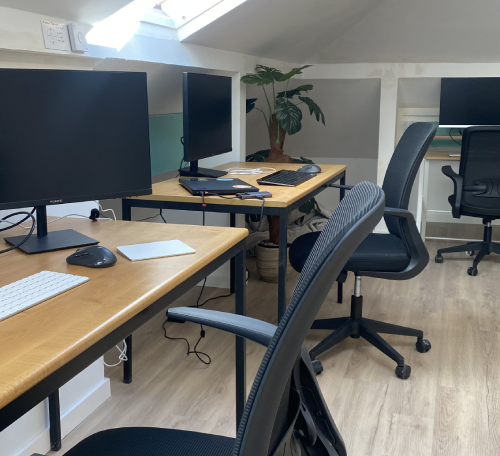
A property designed for remote workers should ideally have a dedicated workspace, strong Wi-Fi throughout the property and some form of backup connectivity.
What should a remote-work accommodation actually provide?
This is where many properties marketed towards digital nomads fall short. A desk and Wi-Fi are not necessarily enough. If you are staying for a month or longer, think about the property as your temporary home rather than simply somewhere to sleep.
LOOK FOR:
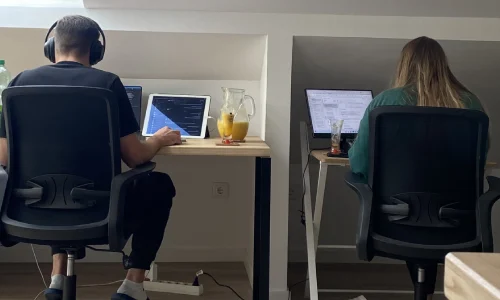
A proper workspace
A dedicated desk and ergonomic chair make everyday work more productive than relying on a kitchen or dining table.
Reliable internet
Choose accommodation with fast fibre & consistent Wi-Fi capable of handling video calls, cloud work and large uploads.
Backup connectivity
A backup internet or battery system keeps you connected during the rare occasions when power or service is interrupted.
Good natural light
Bright, naturally lit workspaces improve comfort, reduce fatigue and create a much more enjoyable environment for longer working days.
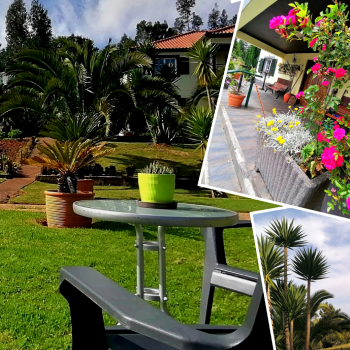
Outdoor space
A garden, terrace or balcony gives you somewhere to recharge, eat lunch or take calls away from your screen.
A quiet environment
Peaceful surroundings are invaluable for focused work and uninterrupted video meetings throughout the working day.
Heating
Choose accommodation with heating for cooler countryside evenings and good ventilation or cooling for warmer coastal summer days.
A place to live
A proper kitchen, comfortable communal areas and laundry facilities become essential when your stay extends beyond a few weeks.
Do you need a car in Madeira?
For some remote workers, no. For others, absolutely.
If you are staying in central Funchal, you can manage much of your daily life without one. Unless ofcourse, you want to explore much of the island at your own pace.
Machico and other towns also have useful local services and public transport.
But if you choose a countryside location, a car gives you much more freedom.
Having a car makes it easier to:
- explore the island before or after work
- visit supermarkets and larger shops when you are in small coastal towns and countryside estates.
- reach hiking trails
- go to the coast
- visit different towns
- make the most of evenings and weekends
- getting up early to go watch that special sunrise
Madeira’s main roads and expressways are free to use, and the island’s road network makes it possible to move between very different parts of the island relatively quickly.
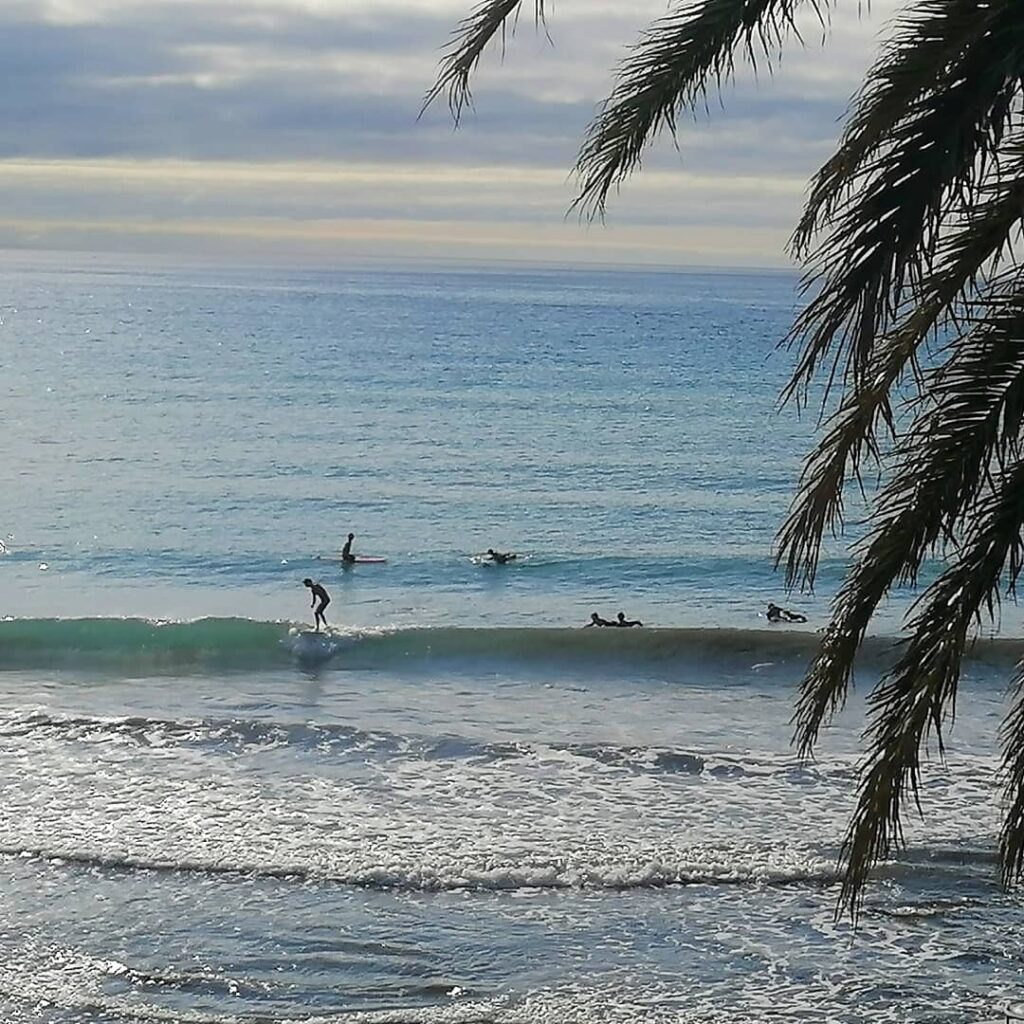
There is also another advantage. You do not necessarily need to live beside the ocean to enjoy Madeira’s coastal lifestyle. You can work from a quiet countryside base and drive down to the coast when you want the beach, restaurants or a swim.
That flexibility opens up considerably more accommodation choices.
Madeira's time zone is surprisingly useful
Madeira operates on Western European Time in winter and Western European Summer Time in summer. That puts it in the same time-zone relationship as the UK and Ireland.
For much of continental Europe, including Germany, the Netherlands, France and Italy, Madeira is normally one hour behind.
That is a small difference, but it can be very convenient if your clients or colleagues are spread across Europe.
For example, someone working with a German or Dutch team can start at 8:00 Madeira time and still be working on a normal European schedule.
The US East Coast is several hours behind Madeira, which can also create useful overlap.
A remote worker can therefore have a European morning while still being available to American clients later in the afternoon.
For internationally distributed teams, that flexibility is one of Madeira’s quieter advantages.
What is the weather like for working remotely?
Madeira’s climate is one of its biggest attractions, but it is important to understand that Madeira does not have one single climate.
The island’s mountains create numerous microclimates.
The coast can be warm and sunny while the mountains are covered in cloud.
Higher locations can be cooler and wetter than the south coast.
The official tourism authority describes Madeira’s climate as mild throughout the year, with average temperatures broadly ranging from around 15°C in winter to around 25°C in summer.
For remote workers, this is actually an advantage.
You can choose your location according to the type of climate and environment you prefer.
If you want warmth and ocean views, coastal areas may suit you.
If you prefer cooler temperatures, greenery and a countryside environment, higher locations such as Santo da Serra can be more comfortable, particularly when working during the day.
And because the island is relatively compact, you can experience several different climates in a single day.

What is it actually like to work from Madeira?
The biggest difference is not the internet. It is what happens after you close the laptop.
A normal working day can feel very different here. You might have a couple of hours of meetings in the morning, take lunch outside, work through the afternoon and then go for a walk before dinner. On another day, you might finish work and drive to the coast.
At the weekend, you can hike through the mountains, explore a levada, visit a viewpoint, swim in natural pools or simply spend the afternoon in a village café.
The island makes it easier to build movement and outdoor time into an ordinary working week. That is one reason people who initially plan a few weeks sometimes find themselves considering a much longer stay.
The Madeira remote-work community
You do not have to arrive knowing anyone.
The Digital Nomads Madeira Islands initiative has created a recognised community around remote work, beginning with Ponta do Sol and expanding to other parts of Madeira and Porto Santo.
Ponta do Sol remains the best-known community hub, with its working space and regular events.
Machico, Funchal, Santo da Serra and other parts of the island have developed their own communities and activities as well.
This is particularly useful for people travelling alone.
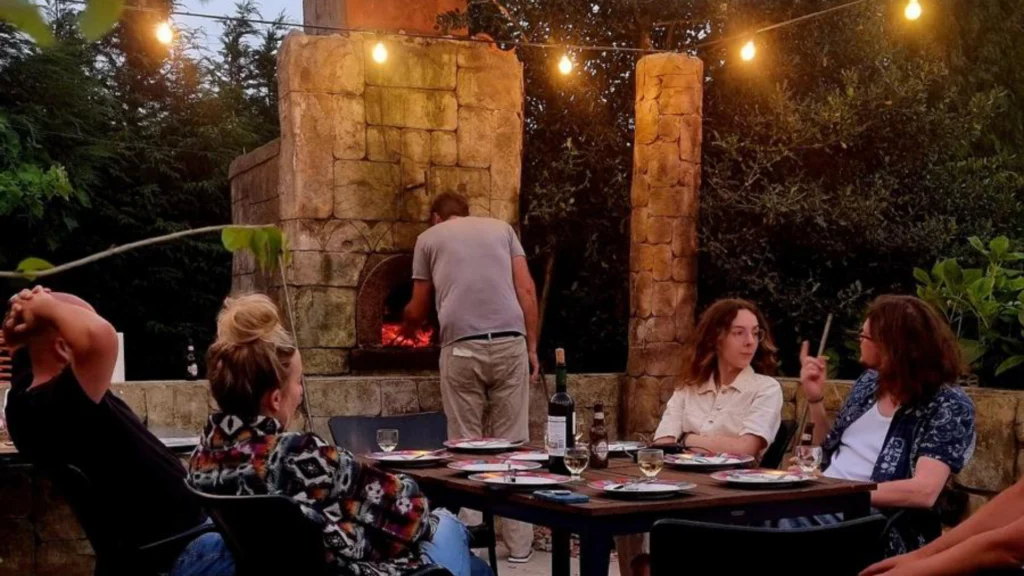
There is a big difference between working alone somewhere beautiful and living somewhere beautiful where you can actually meet people
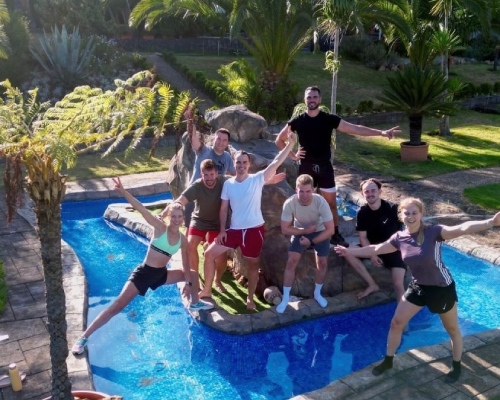
If community is important to you, check what is happening locally before choosing your accommodation.
How much does it cost to live and work in Madeira?
This is one area where old digital-nomad articles can be misleading.
Madeira is not the ultra-cheap European destination that some older articles make it sound.
Accommodation prices have increased, particularly in popular coastal locations and during periods of high demand.
A countryside property with a longer-stay arrangement can offer a very different value proposition from a short-term apartment in a popular coastal location.
Your monthly cost will depend heavily on:
- where you stay
- whether you live alone or share
- length of stay
- whether utilities are included
- whether you need a car
- how often you eat out
- how much you travel around the island
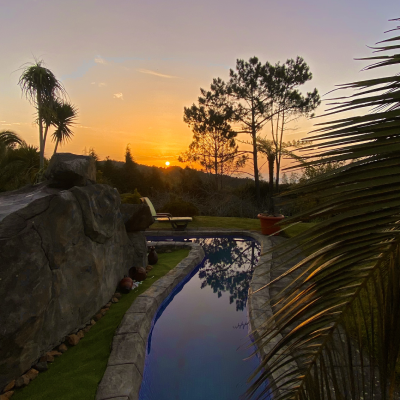
The best way to compare accommodation is therefore not simply by the nightly price.
Consider what is included.
- Does the price include electricity, water and internet?
- Is there a proper workspace?
- Is there parking?
- Are there communal areas?
- Is cleaning included?
- Can you work comfortably there for several months?
Those details can make a significant difference to the real cost of living.
The Madeira remote-work community
You do not have to arrive knowing anyone.
The Digital Nomads Madeira Islands initiative has created a recognised community around remote work, beginning with Ponta do Sol and expanding to other parts of Madeira and Porto Santo.
Ponta do Sol remains the best-known community hub, with its working space and regular events.
Machico has also developed their own communities and activities as well. Homeoffice Madeira has definately left their mark focusing, on offering remote working professionals with a space to work , live and enjoy everything the Madeira has to offer.
The truth be said, they are the pioneers of remote working in Madeira, long before the Digital Nomad Village became known.
Together with Cabeço Alto estate, they have created a unique professional remote working estate in Madeira, placing them amongst the best remote working and coliving venues in Europe.
This is particularly useful for people travelling alone.
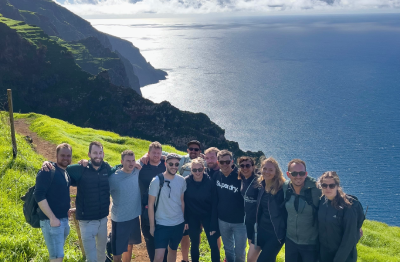
There is a big difference between working alone somewhere beautiful and living somewhere beautiful where you can actually meet people.
If community is important to you, check what is happening locally before choosing your accommodation.
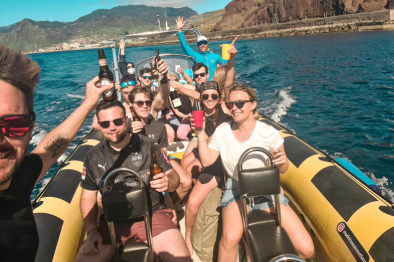
How much does it cost to live and work in Madeira?
If you’re expecting Madeira to be a €600-a-month digital nomad destination, you’ll be disappointed. Those days are largely gone.
Accommodation has risen steadily over the past few years, particularly in Funchal and some of the island’s most sought-after coastal locations. As Madeira’s reputation has grown among remote workers and longer-stay visitors, demand has naturally pushed prices higher.
The more useful comparison, however, isn’t with the cheapest destinations in Southeast Asia or Eastern Europe. It’s with the places many remote professionals are choosing between: Lisbon, Barcelona, Amsterdam, Berlin or Dublin. Compared with those cities, Madeira still offers excellent value, especially when you consider the lifestyle that comes with it.
A realistic monthly budget (2027)
- Low cost / Basic coliving – €500 – 900
- Comfortable coliving – €1,200 – 2,100
Private apartment – €1,700–2,400
For most remote workers, accommodation will be the largest monthly expense. Groceries, cafés and local restaurants remain relatively affordable, and many everyday costs are noticeably lower than in Northern European capitals. A coffee typically costs around €1–1.50, while a good lunch in a local restaurant is often €10–15.
Two factors that rarely appear in cost-of-living comparisons are on-site infrastructure reliability for working remotely and, of course, location safety.
Value is about more than price
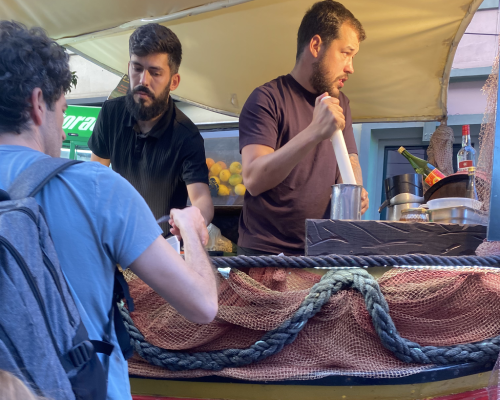
Madeira consistently ranks as one of Portugal’s safest regions, and Portugal itself remains among Europe’s safest countries. For many remote workers, that translates into something difficult to put a price on: feeling comfortable walking home after dinner, leaving for an early morning hike, or settling into a new community with confidence.
When comparing accommodation, don’t focus solely on the monthly rent. Ask what is actually included. Fibre internet, utilities, parking, cleaning, a dedicated workspace and comfortable communal areas can significantly improve both your budget and your day-to-day experience.
Ultimately, Madeira isn’t the cheapest digital nomad destination in Europe—but it remains one of the strongest value-for-money choices for professionals looking for a healthier, safer and more balanced place to live while working remotely
Want a detailed breakdown?
Read our Cost of Living in Madeira for Remote Workers (2027), where we compare Funchal, Machico, Santa Cruz and Santo da Serra, with real monthly budgets, supermarket prices, restaurant costs and accommodation comparisons.
Healthcare in Madeira
Portugal has a public healthcare system, and Madeira forms part of that system.
For visitors from EU countries, the European Health Insurance Card (EHIC) provides access to medically necessary state healthcare during temporary stays under the applicable conditions. It does not cover private healthcare, repatriation or replace travel insurance.
Emergency services can be reached on 112.
For longer stays, particularly if you are moving rather than simply visiting, you should understand your own healthcare and insurance position before arriving.
Non-EU visitors should check their insurance requirements and make sure their cover is appropriate for the length and nature of their stay.
Visas and staying legally in Madeira
This is one area where you should not rely on an old blog post.
Immigration rules can change, and the requirements for a short visit are very different from the requirements for living and working in Portugal for several months.
EU / EEA / Swiss citizens
Citizens of the EU, EEA and Switzerland have different rights from non-EU nationals and can generally move within the relevant freedom-of-movement framework.
However, if you intend to stay for an extended period, you still need to understand the registration and residence requirements that apply to you.
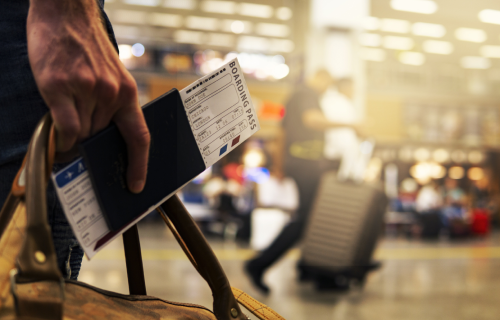
Non-EU remote workers
Portugal has a specific residence route for people whose professional activity is performed remotely for entities outside Portugal.
AIMA currently describes the route as a residence permit for remote professional activity for entities outside Portugal, commonly referred to as the Digital Nomad route.
For the residence-permit stage, AIMA lists requirements including:
- a valid passport
- a valid residence visa for remote professional activity
- evidence of the employment or service relationship with an entity outside Portugal
- proof or declaration concerning the applicant’s Portuguese residence address
AIMA currently states that the temporary residence permit for this route is valid for two years and can be renewed for successive three-year periods.
Important: because this guide is being prepared in 2026 for 2027, anyone considering a Digital Nomad visa should check the current requirements with the relevant Portuguese consulate and AIMA before applying. Financial thresholds, documentation and procedures can change.
Do not make an important immigration decision based solely on a blog article — including this one.
How long should you stay in Madeira?
There is no single correct answer.
Two to four weeks
Good if you want to test Madeira before committing to a longer stay.
You will have enough time to experience more than just the tourist side of the island, but you may still feel as though you are visiting rather than living here.
One to three months
This is where Madeira starts to make real sense as a remote-work destination.
You have time to establish a routine.
You learn where to shop, where to have coffee, where to exercise and which places you actually enjoy visiting.
The island begins to feel less like a holiday destination and more like a temporary home.
Three to six months
For many remote workers, this is the sweet spot.
You can settle into a genuine routine while still having enough time to explore different parts of the island.
This longer-stay approach is also consistent with the way Madeira’s digital-nomad initiative was originally conceived: encouraging remote professionals to spend periods of months rather than simply passing through
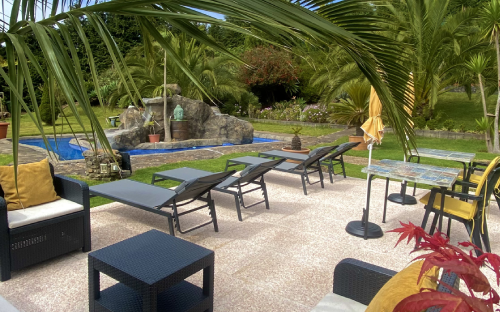
The best part of Madeira may be "the balance"
There is a temptation to think of Madeira as a choice between city life and complete isolation. It isn’t.
You can live close to the ocean or high in the countryside. You can spend your morning in a coworking space and your afternoon hiking. You can have a busy social weekend and a quiet Monday. You can stay in Funchal if you want urban convenience, or choose somewhere like Santo António da Serra if you want space, greenery and a slower rhythm without being cut off from the rest of the island.
That flexibility is one of Madeira’s greatest strengths.
What to check before booking your remote-work stay
Before committing to accommodation, ask yourself these questions:
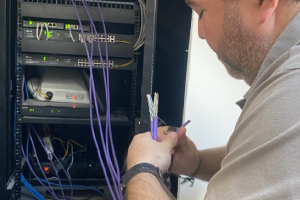
Internet
- Is there reliable fibre?
- What is the actual speed?
- Is there backup connectivity?
.
Workspace
- Is there a proper desk?
- Is the chair comfortable?
- Can you take private video calls?
Location
- Do I need a car?
- How far are supermarkets and restaurants?
- How long will it take to reach the airport?
- How easy is it to get to the coast or hiking trails?
Climate
- Am I comfortable with the temperature at this altitude?
- Does the property have heating?
- Is the workspace comfortable year-round?
.
Living
- Is there a proper kitchen?
- Is there outdoor space?
- Is there somewhere comfortable to relax after work?
- Are utilities included?
Community
- Will I meet other people?
- Are there local events or coworking opportunities?
- Is the area suitable for the type of social life I want?
Length of stay
- Is there a monthly rate?
- Are cleaning and utilities included?
- What happens if I want to extend my stay?
These questions are far more useful than simply asking whether a property is “digital-nomad friendly”.
So, is Madeira a good place to work remotely in 2027?
For the right person, absolutely. But the real appeal is not simply the weather.
Madeira offers something more difficult to define: a workable balance between professional life and everyday life.
- You can have reliable infrastructure and high-speed internet without living in a large city.
- You can have an international community without being surrounded by tourists.
- You can live in the countryside without being completely disconnected.
- You can finish work and have mountains, ocean, walking trails and villages within reach.
- And you can choose how much of the island you want to experience.
For some people, that means a month. For others, it becomes several months. The important thing is to choose your base carefully
The best remote-work accommodation is not necessarily the one with the best photograph or the lowest price. It is the place where you can work comfortably, sleep well, connect with people and still feel that you are actually living in Madeira.
That is ultimately what makes working remotely from Madeira so appealing. It is not about taking your office on holiday. It is about creating a different kind of everyday life.